HoneyBook · 2025
An AI business partner that helps business owners run their business through conversation.
Background
In 2025 HoneyBook repositioned from a CRM tool to an AI business partner, and the AI chat was the first product surface that had to make that promise real. As the lead designer on the launch, I owned the end-to-end experience: the chat component system, the opt-in flow, and the conversational design. The product launched to all members on March 25, 2025.
Independent business owners told us the same four things in research. They feel insecure about strategy and growth. They're overwhelmed by tasks and deadlines across projects. They can't always find or figure out HoneyBook features. And when they need one answer about a client ("how much am I owed?"), it's buried under too many clicks.
The problems
🤔
Strategic insecurity
Unsure how to grow or where to focus next.
🫤
Hidden features
Members can't find or figure out what exists.
😱
Operational overwhelm
Tasks and deadlines pile up across projects.
🤯
Buried answers
One client question takes six clicks to answer.
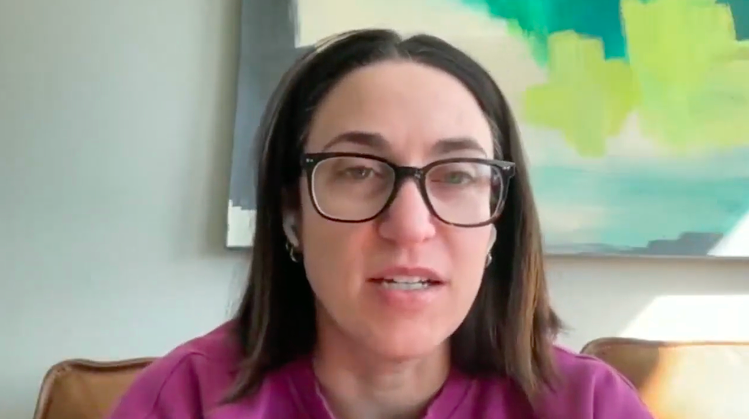
"I open HoneyBook on my phone, search the person's name, find their project, go into their invoice... did they book eight people or seven?"
Ivy, Makeup artist, beta member interview
Build a conversational surface that answers three kinds of questions: about your projects, about your business strategy, and about HoneyBook itself. Behind the scenes, an orchestration layer routes each prompt to the right skill and injects the member's real business data into the answer. We tracked opt-ins, weekly usage, retention, and the thumbs-up rate on responses.
Tracking metrics
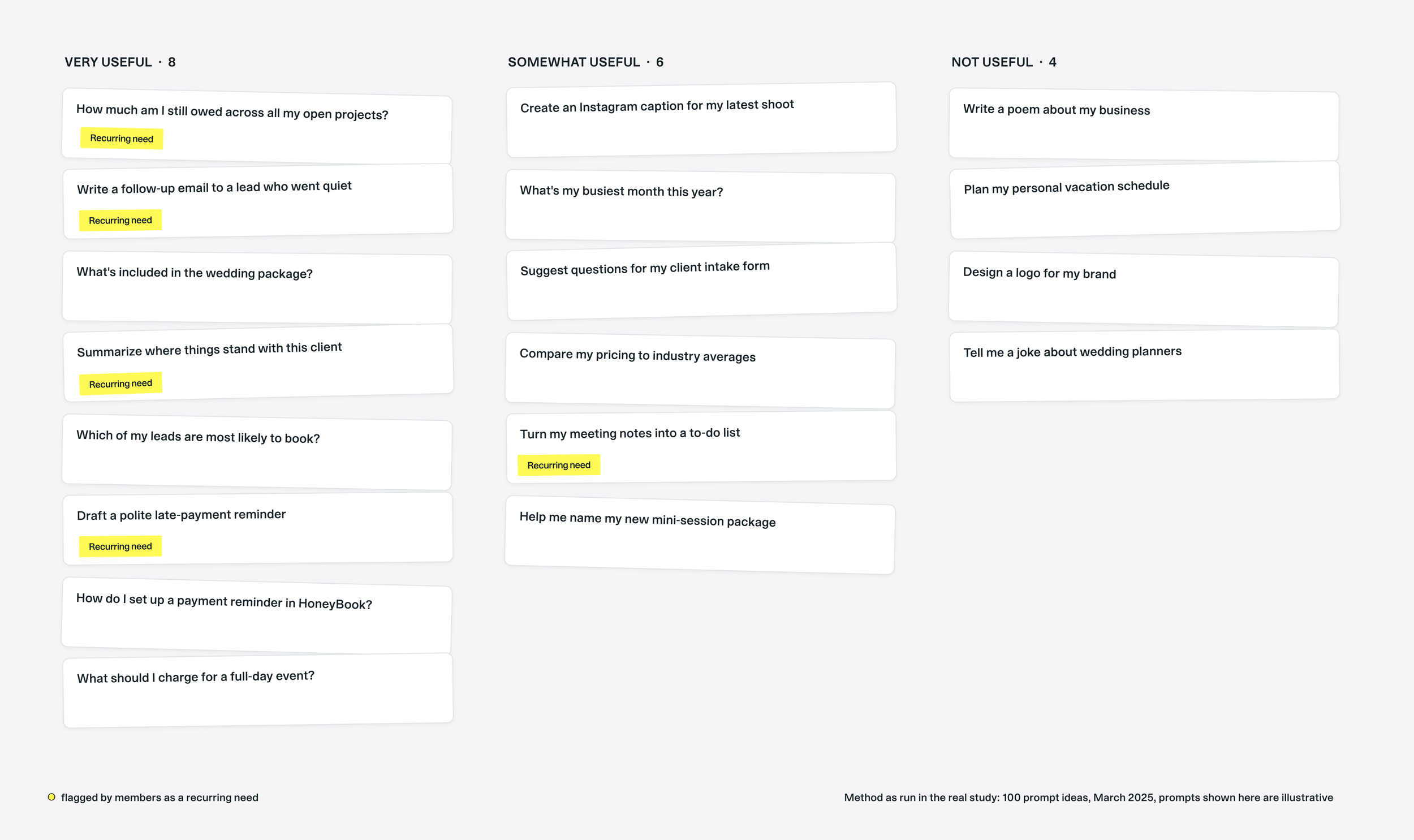
Before locking the design we ran moderated concept testing with 8 tenured members, then 16 interviews with HoneyBook Pros and beta users, plus a card sort of 100 prompt ideas to learn what people would actually ask.
Research
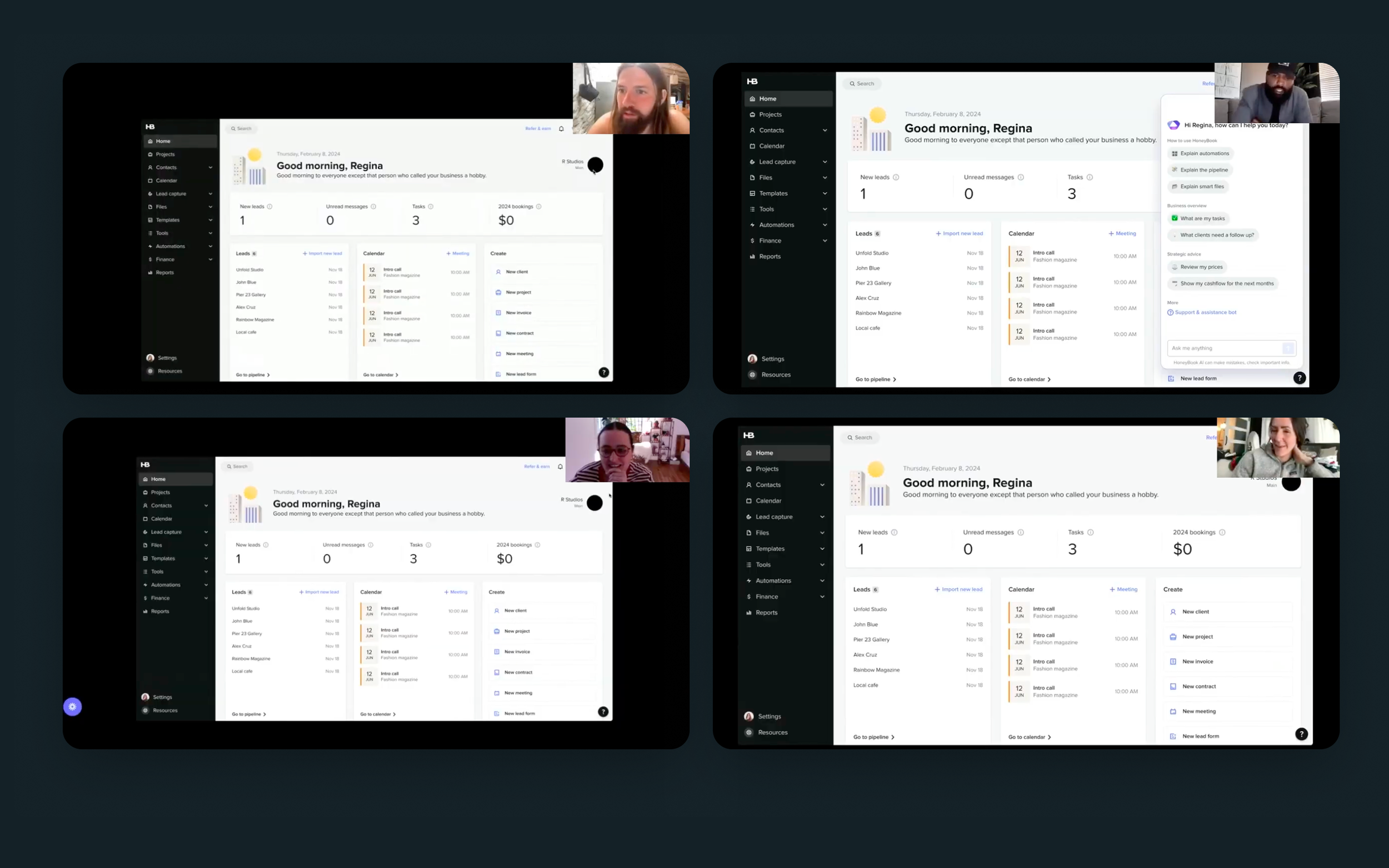
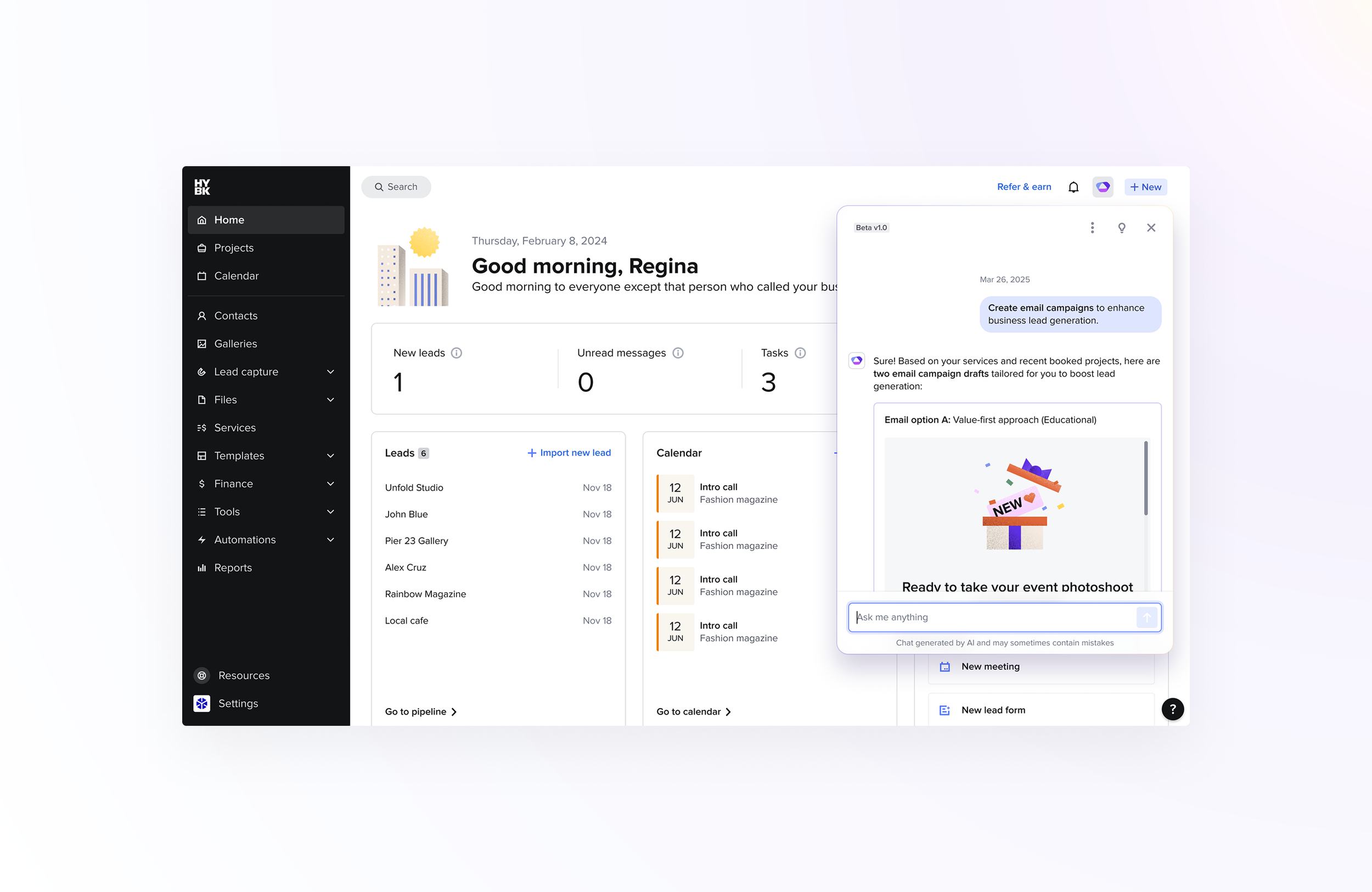
We tested two competing directions: a persistent floating AI "blob" that follows you across screens, and a calmer top-nav icon opening a popover. The blob won attention but lost on control, and members were confused about where they were when screens changed underneath it. We shipped the popover.
Interaction model
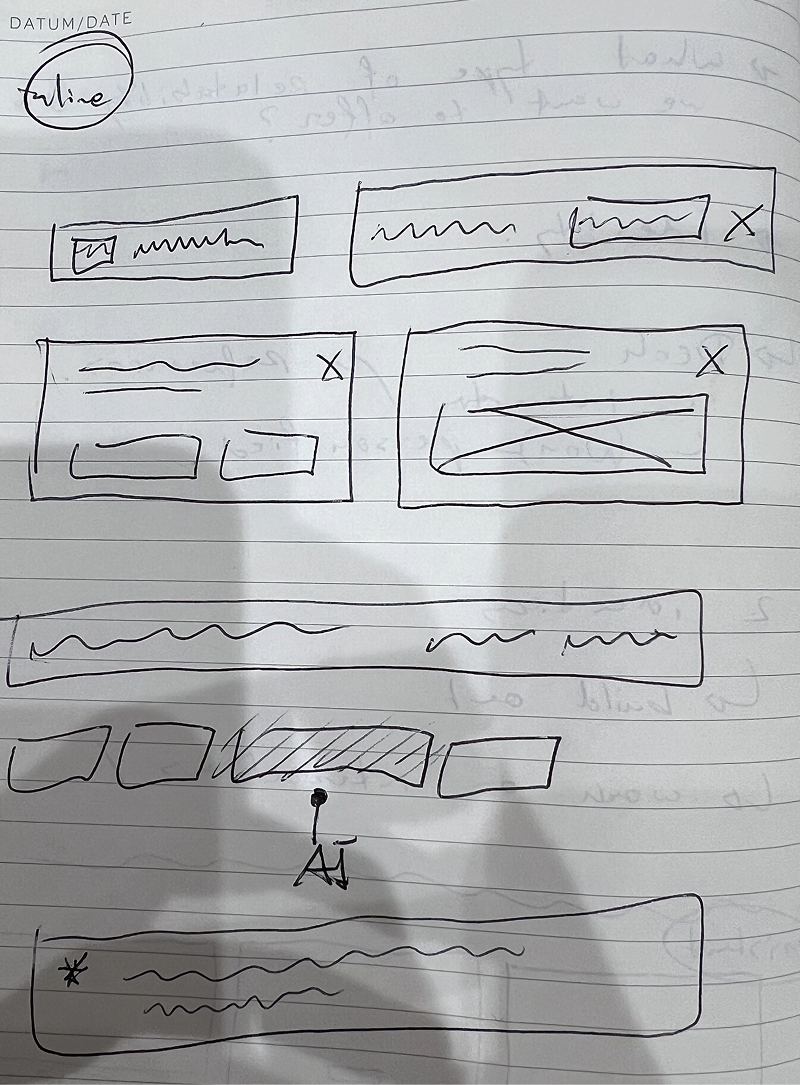
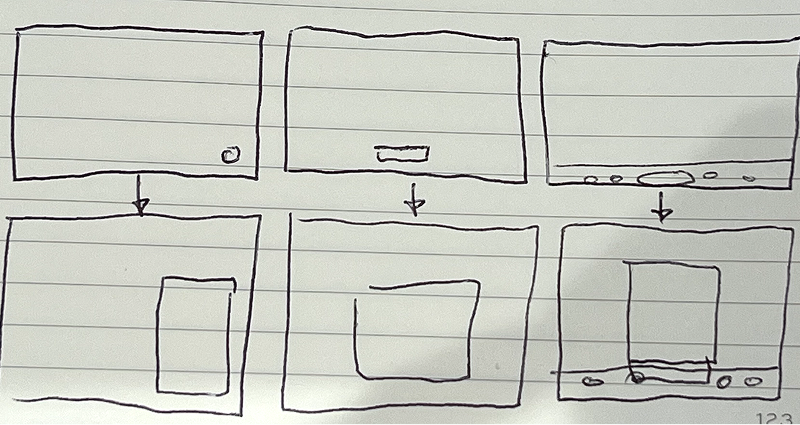
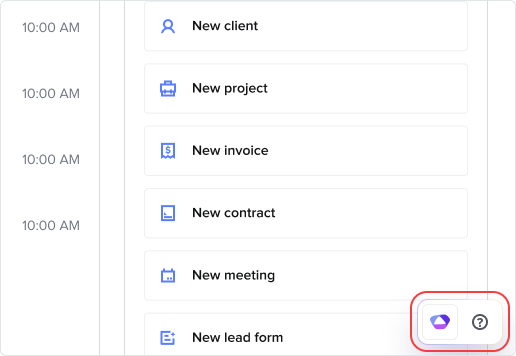
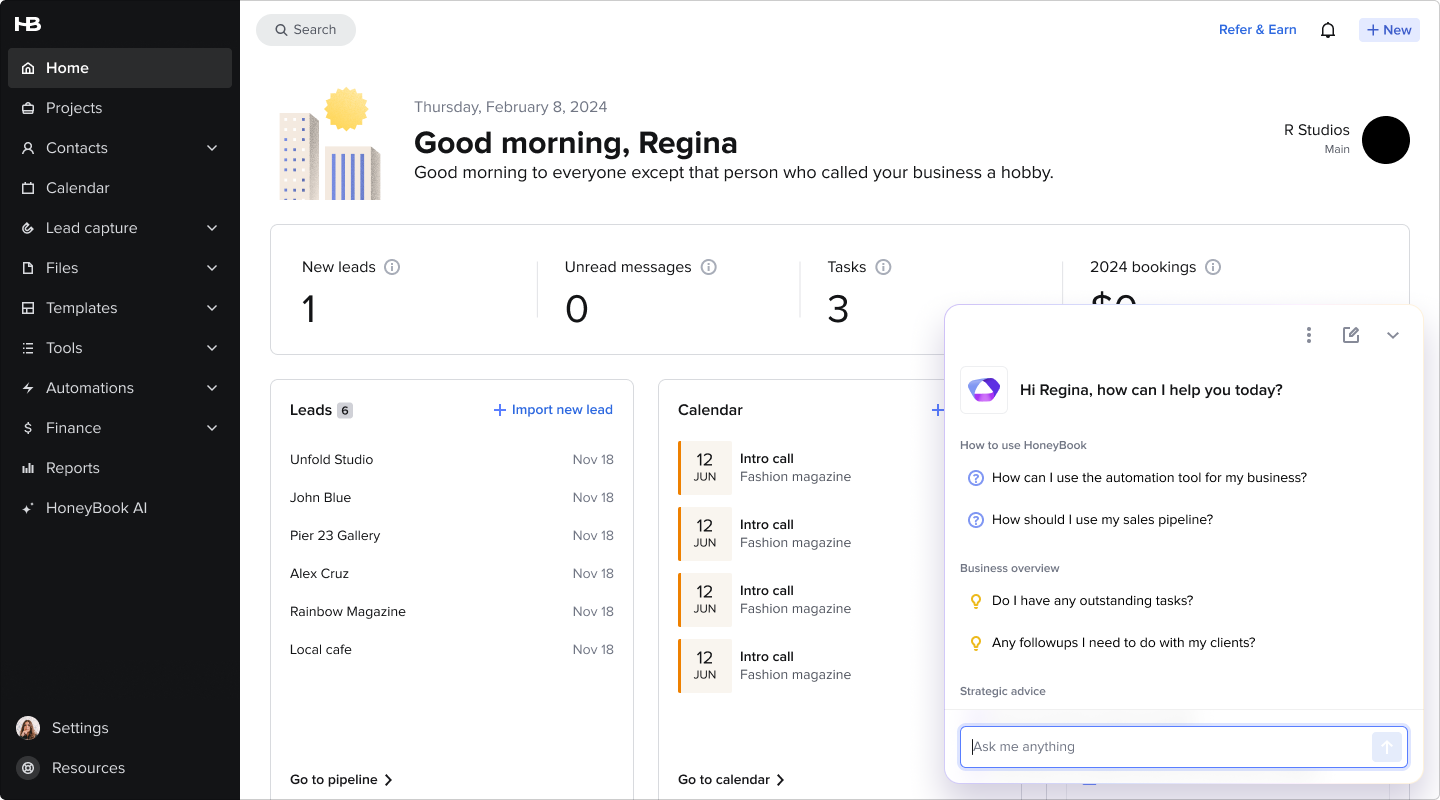
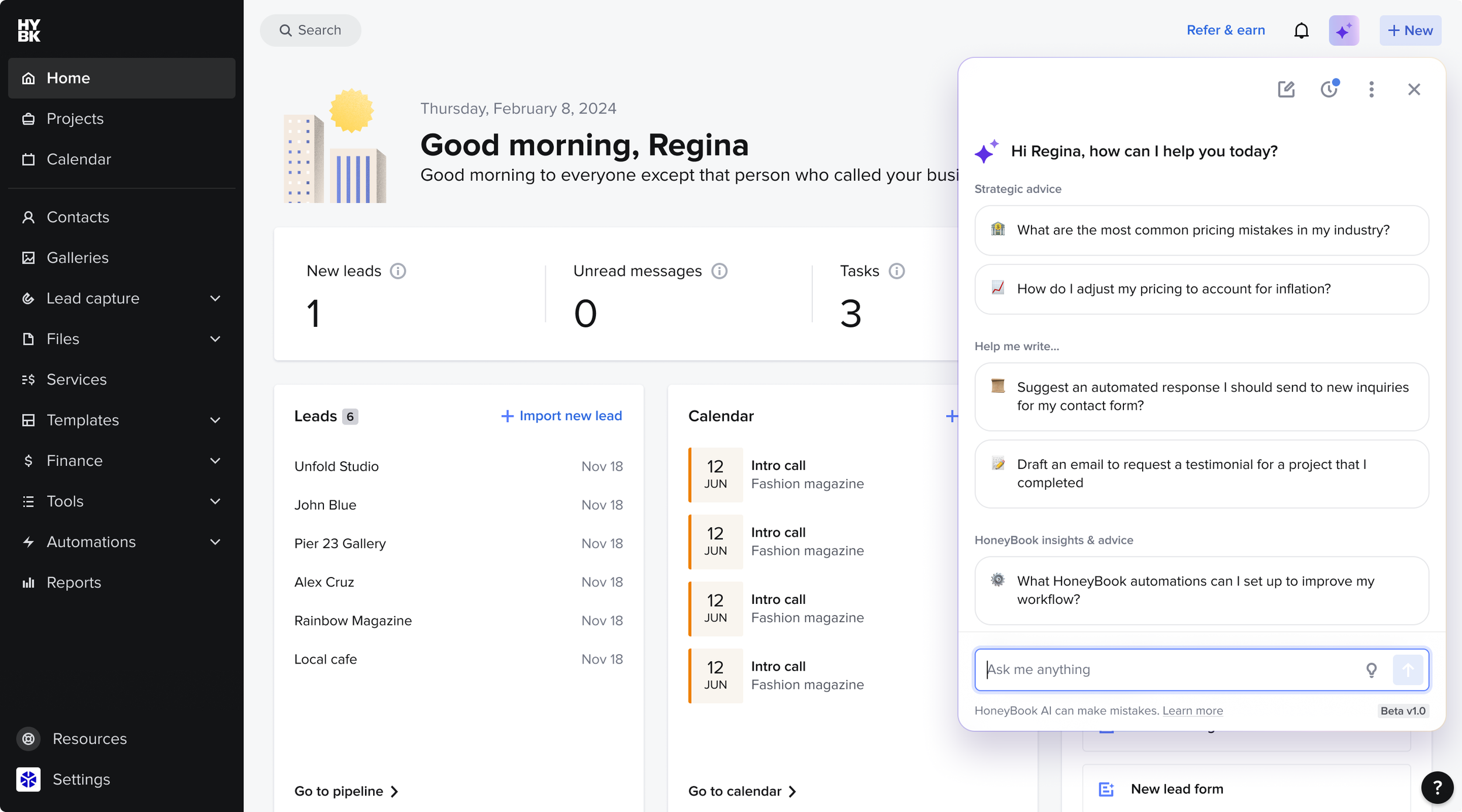
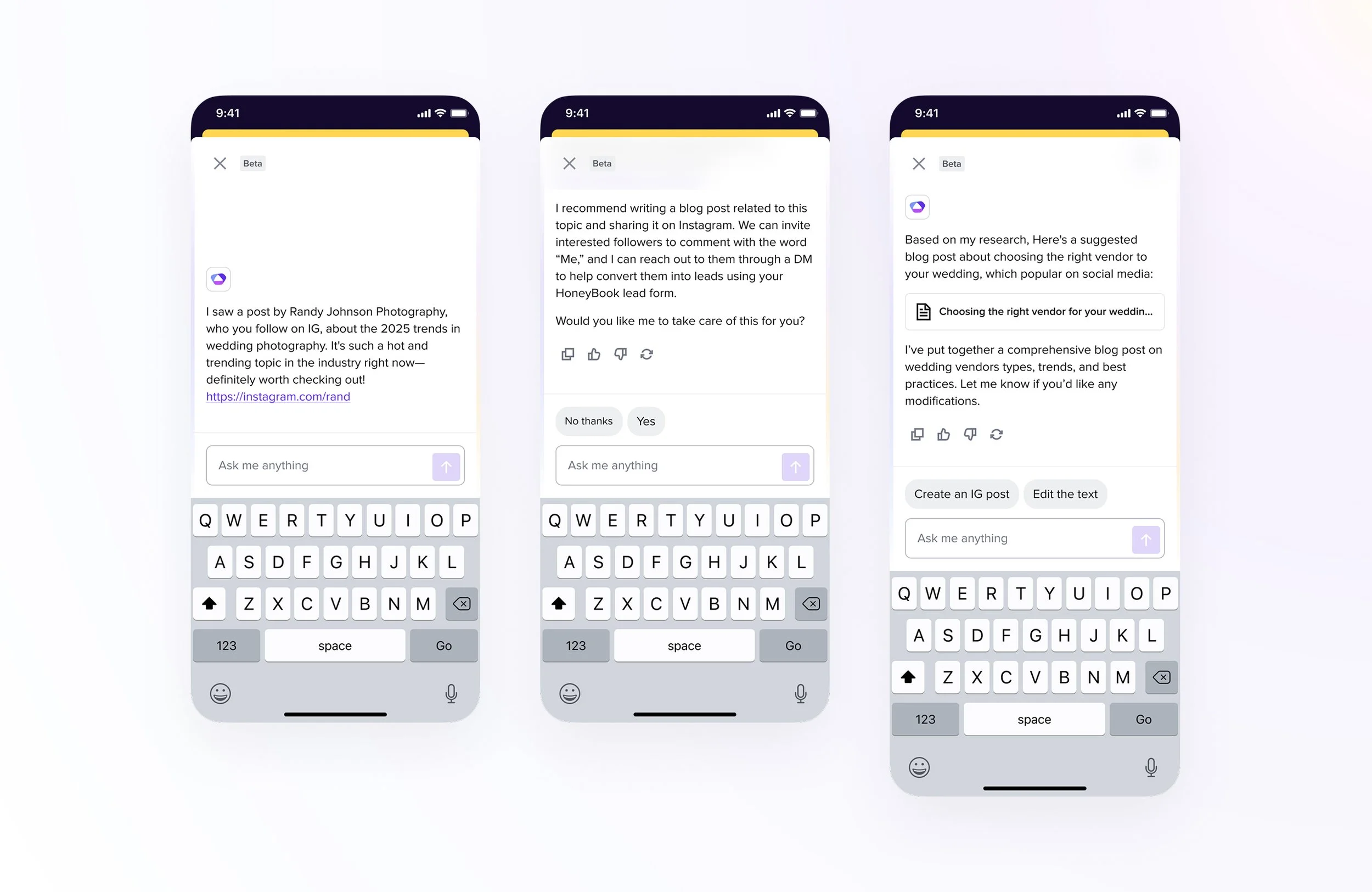
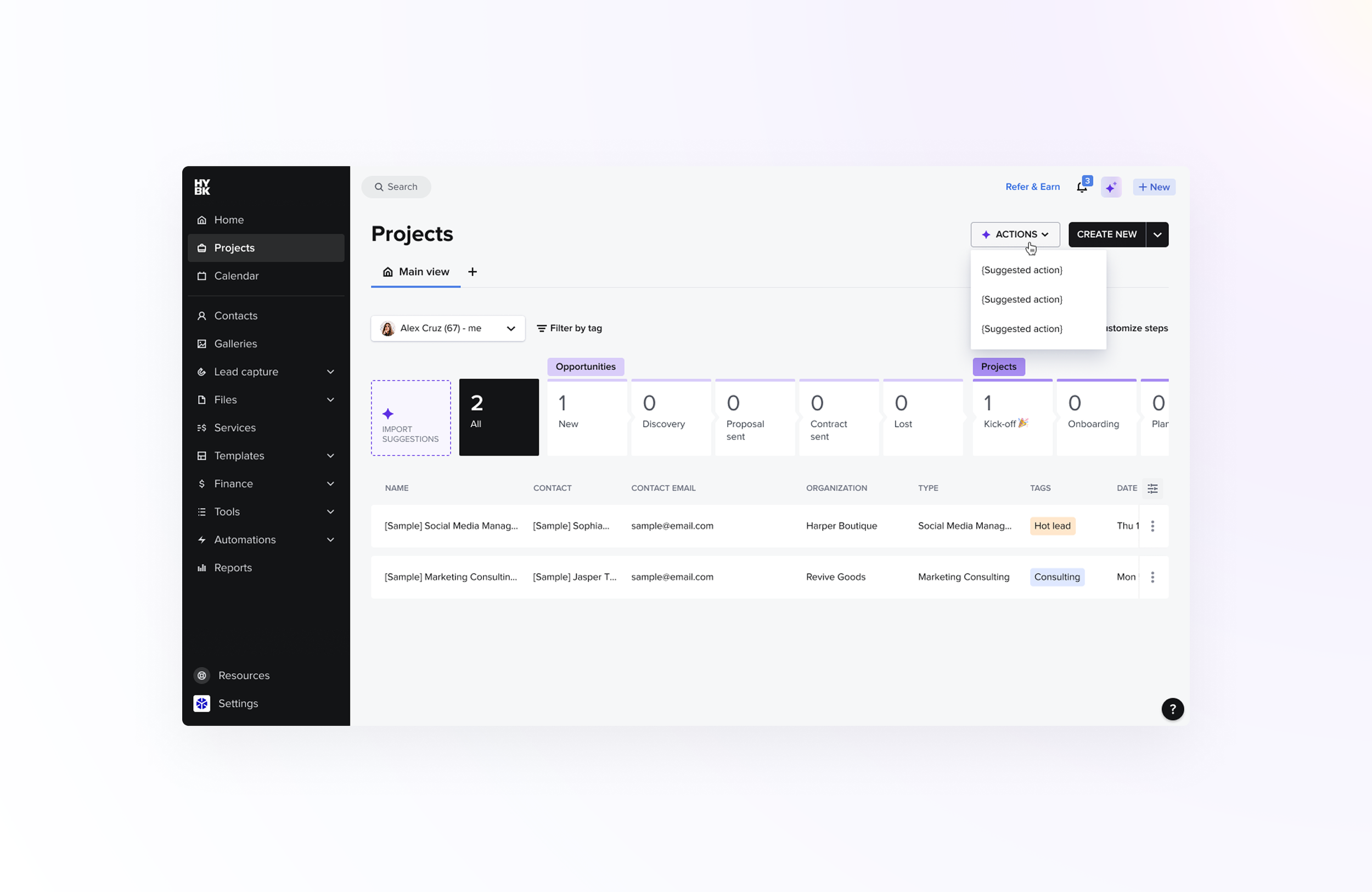
A second tension was assistant vs. agent. V1 deliberately stayed an assistant: it drafts emails and answers questions, but a defined list of actions stays in the owner's hands. When a question is ambiguous ("John’s wedding", three Johns), the AI asks and surfaces a project picker right inside the input.
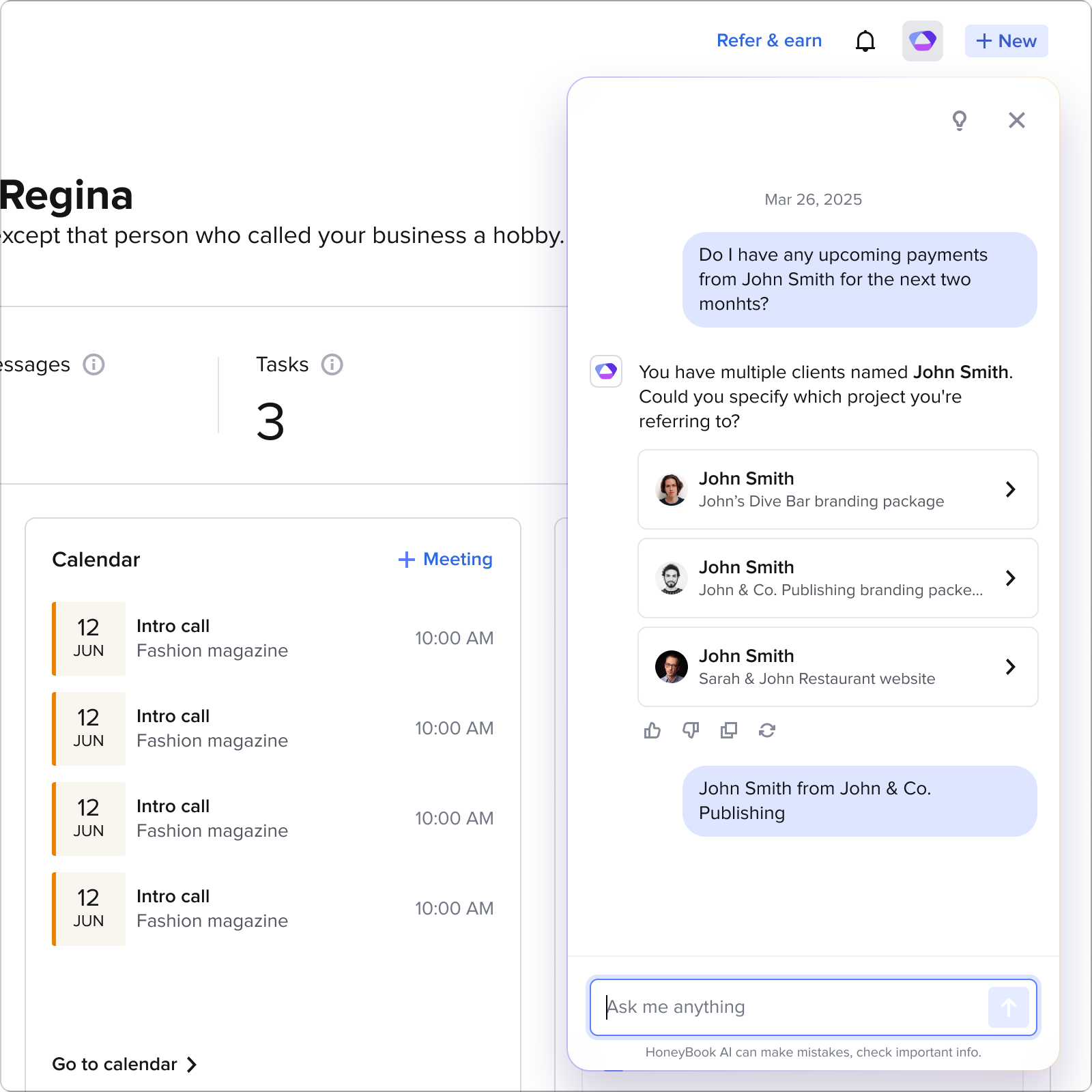
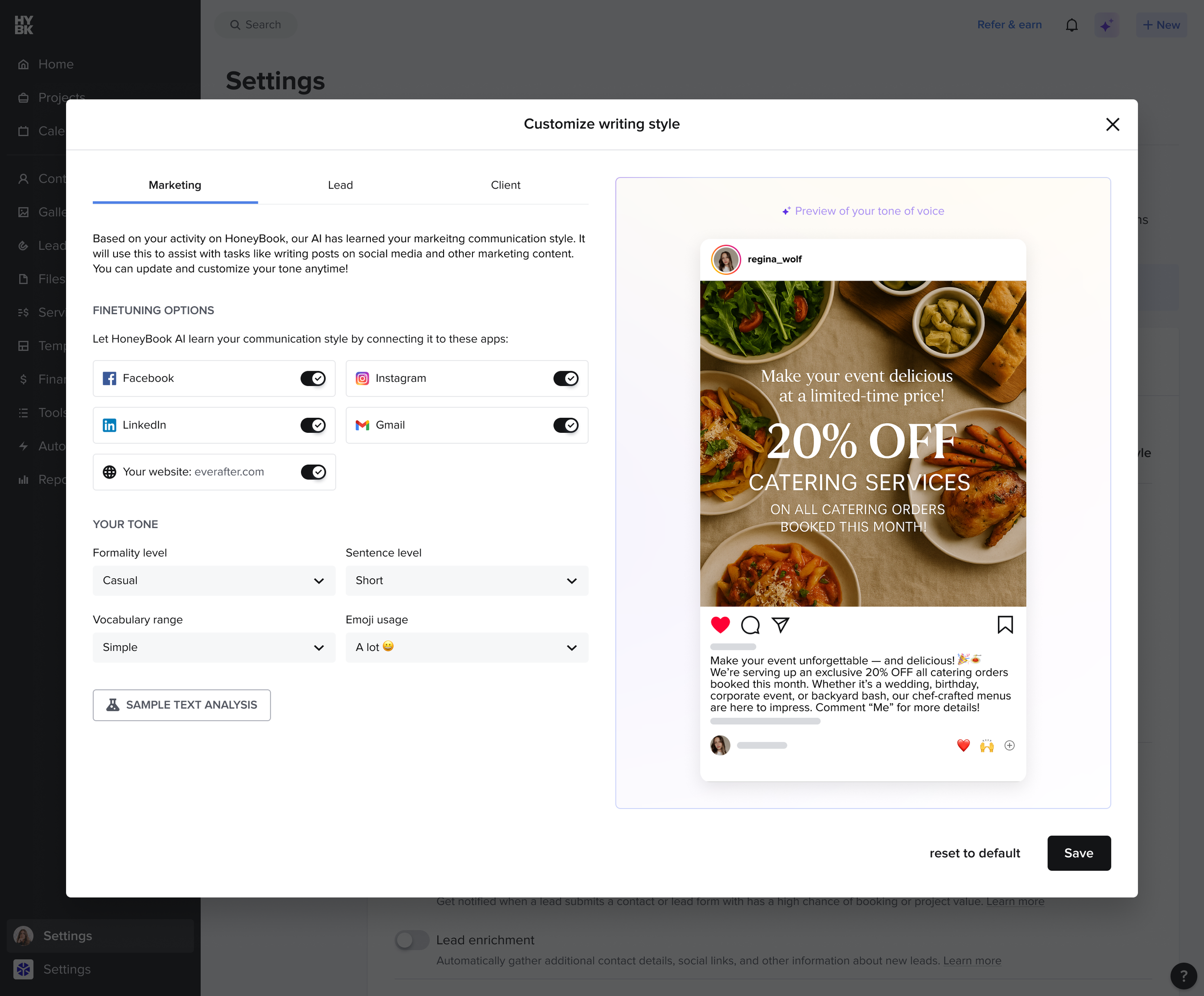
An AI that touches your money and your clients has to earn its place. The interface carries that logic: a clear opt-in with expectation setting, a persistent disclaimer, thumbs feedback on every response, and a fallback where the opt-in flips to a waitlist if quality dips. Even the AI's voice was a designed artifact, with written rules for tone, structure, and restraint.
Designing for trust
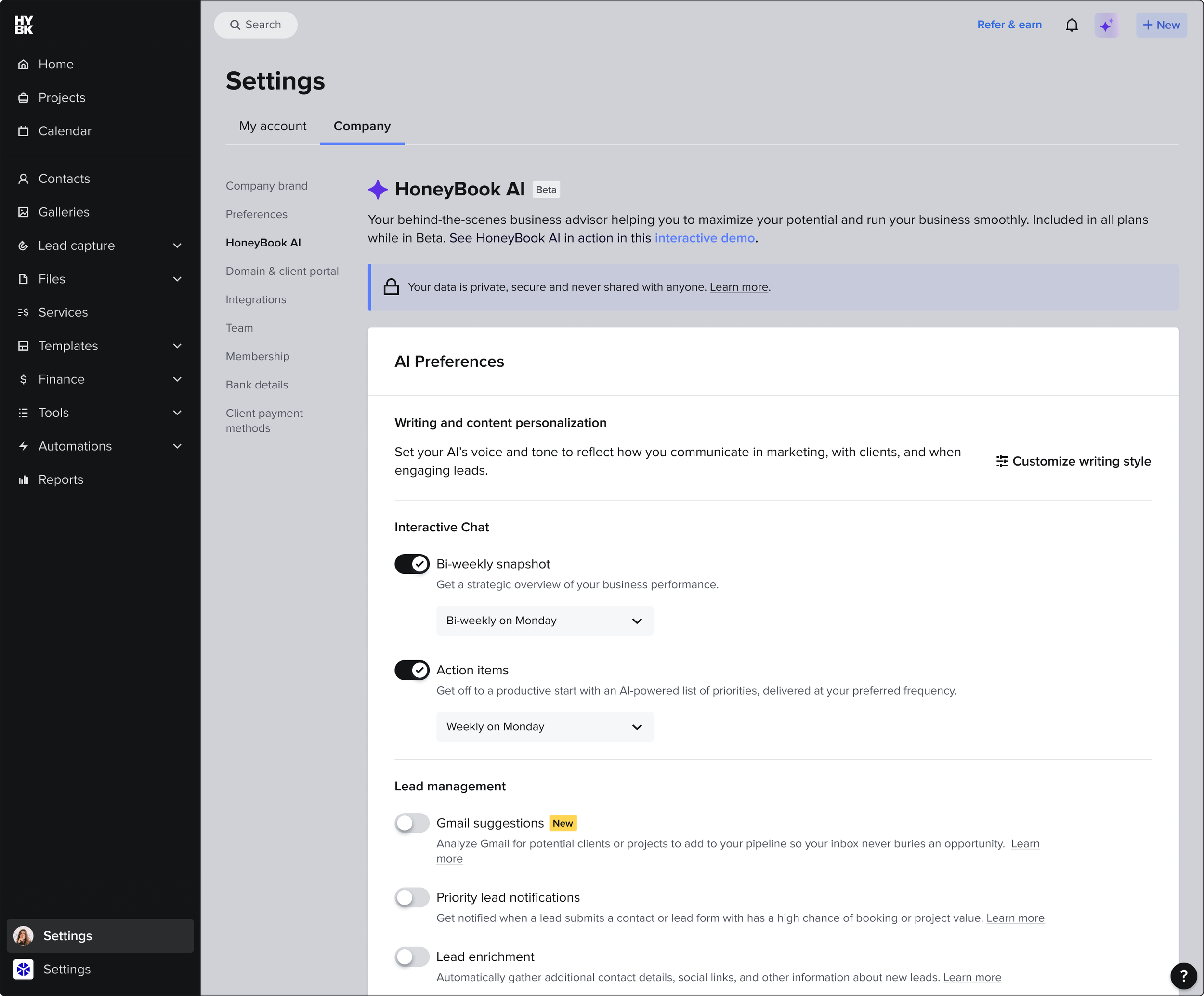
We de-risked the launch in three waves: a bare LLM to 30 Pros to test the pipes, full skills to 300 friends-and-family users, then GA with an A/B test on new trialers. A live monitoring channel surfaced every conversation so design, product, and engineering could watch real usage and fix rough edges within days.
User testing & rollout
The interaction layer is where the partner feeling lives. Responses stream in with a thinking-then-typing animation, render rich formatting, and every answer carries thumbs, copy, and regenerate actions that feed quality monitoring. A prompt inspiration library sits behind a lightbulb icon with suggestions that rotate daily, so a blank input never feels like a dead end.
Interface